Swimwear and activewear brands are often faced with complaints regarding their products. Though a swimsuit appears awesome at first, it usually starts to sag after several weeks in the pool. Consequently, it becomes loose and is not having its shape. The vivid colors start to lose their power. The fast breakdown of such clothes is a direct consequence of the use of regular spandex instead of chlorine-resistant spandex. Data collected in a laboratory during the exploitation of the swatch of 100 hours of chlorine-resistant fabric is presented in this report. The test compared a regular fabric with our special D036 fabric. The data received demonstrates the degree of difference that intelligent engineering can create.
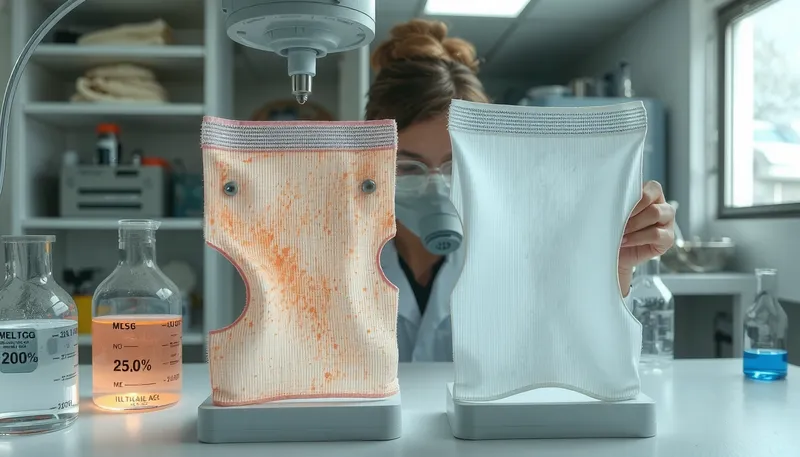
Essential Learning
- Chlorine damages the spandex's elastic fibers. That is why swimming costumes become loose and deformed.
- The 100 hours in the laboratory gave a very relevant finding. A plain Nylon/Spandex fabric gave up 45% of its stretch.
- The same fatigue test was conducted with our D036 Polyester/PBT fabric which had lost much less than 5% of its stretch. The fabric held its original shape and fit.
- Blends that contain high percentages of polyester and PBT are the best option in public pools. They work well in high-chlorine water.
The Concept of Sagging
The main factor causing swimwear to fail is chlorine. Let's visualize the elastic fibers in spandex as thin rubber bands. Chlorine in pool water acts as a pair of chemical scissors. It slices these rubber bands.
When a fiber is gone, the fabric is left with less stretch power. Its recovery is also not as good. If we take into account the long time, the total of such tiny breaks may amount to millions. This numerical factor is the only reason for a swimsuit to be big and saggy. The damage to the whole fabric also refers to the strength. Colors are also affected by this due to the fact that they fade much quicker. Research on the tensile strength of various swimming suits backs up this theory without exception. The first to go with knitted blends are traditional ones, spandex mixes.
Laboratory Analysis: D036's 100-Hour Test
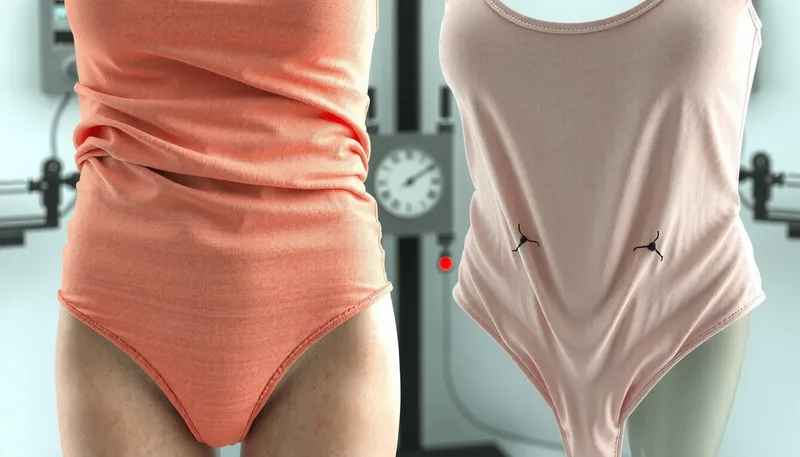
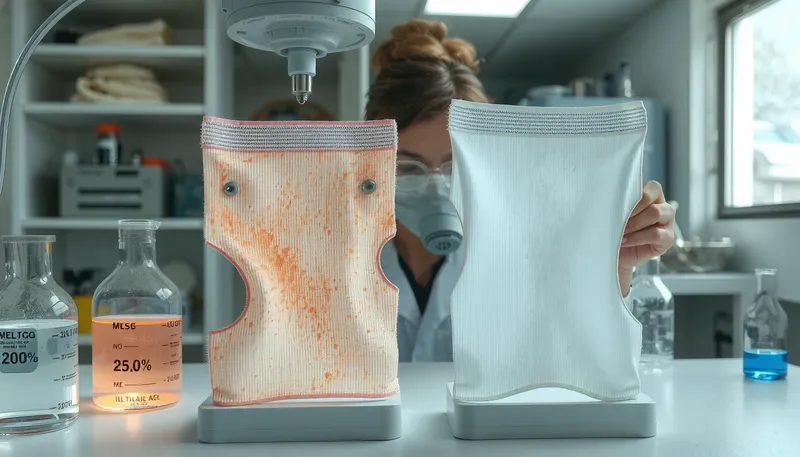
We aimed to investigate the matter directly. Our lab performed a chlorine-resistant fabric 100-hour test. We immersed samples of both fabrics in a controlled liquid. One was a standard one, which is 80% Nylon/20% Spandex fabric. The second was our wavelength of D036 Polyester/PBT blend fabric. The water had 5 parts per million of chlorine. The pH was 7.5. The conditions simulated such a use factor in a public pool in the year 2026.
The findings after a 100-hour long experiment were obvious. We measured changes in stretch, strength, and color.
| Metric | Standard Nylon/Spandex | D036 (Polyester/PBT) | Analysis |
|---|---|---|---|
| Elasticity Loss | 45% (Significant sagging) | <5% (Maintains shape) | D036 retains nearly all its original stretch and recovery. |
| Tensile Strength Loss | 30% (Easier to tear) | <3% (Structurally sound) | The fabric's core strength is virtually unaffected by chlorine. |
| Color Fade (Gray Scale) | Grade 2.5 (Very noticeable fading) | Grade 4.5 (Slight change) | D036 proves to be much more colorfast, which is essential for brilliant designs. |
A 45% loss in stretch is what a person feels when the suit is getting bigger. It doesn't fit well anymore. A 30% loss in strength means the fabric is much easier to tear. As more holes are likely to develop, the data confirm that D036 withstands long-term chlorine exposure.
The Norms of Testing
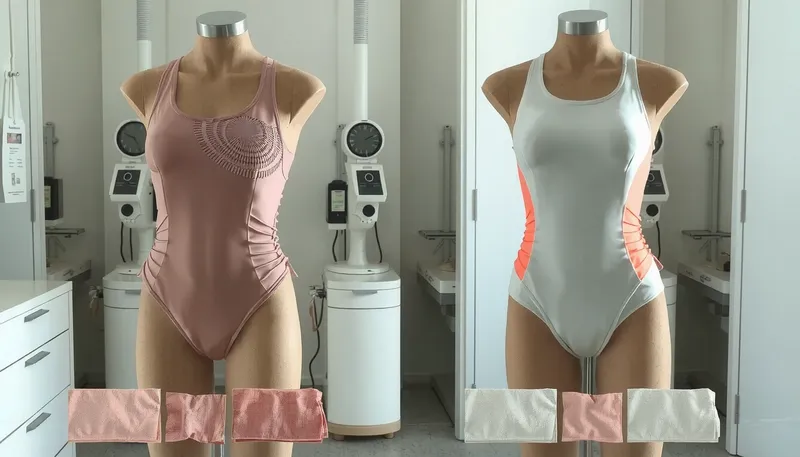
Some official tests are designed to standardize these results. A professional chlorine resistant fabric test must follow specific protocols. With these, the trustworthiness of the results gets guaranteed. The comparison of materials' test results can be just.
The main parts of the test are:
- Chlorine Amount: The test employs a set amount of chlorine which is like in AATCC Test Method 162.
- Temperature & pH: These are kept constant to represent normal conditions in a pool.
- Dwell Time: The length of the fabric's exposure is crucial. Our 100-hour test proves this.
- Inspection: After the tests, specialists look at the fabric for any changes.
The chlorinated pool water color fastness test is one of the core parts of this process. It implements a grey scale for measuring fading. Professional labs such as Intertek are the only ones that perform these standard tests. This ensures the compliance of the products with the specified quality rules.
The Choice for Public Pools
The results of the lab also apply to the real world. D036 is indeed the best choice if fabrics are to be used in chlorine water frequently. This is whitener in particular for public pools. These pools are relatively high in chlorine and also have denser traffic.
Key advantages for high-use areas:
- Stronger & Longer: With negligible strength loss, the clothing has a way longer lifespan. Thus, swim teams and staff uniforms throwaway costs are reduced sharply.
- Keeps Shape: The minuscule loss of elasticity guarantees swimwear keeps its original supportive fit. This is important for both performance and comfort.
- Vivid Colors: The tendency to retain the color stronger helps look logos and designs sharp. This protects the marketing.
For team swimwear, etc or for hotel pool attendant uniforms, D036 is a wise investment.
Go For The Wise Choice
Ordinary swimsuits are doomed to short life in chlorine water. After a while, the spandex fibers break. This ends translate to sagging and fading. The chlorine-resistant fabric test is the only way to show that the performance claims are valid.
The 100-hour test results are beyond doubt. Advanced fabrics like our D036 Polyester/PBT blend really are a supreme solution. They are long-lasting and stand up to chlorine swimming fabric breakdown.
Frequently Asked Questions (FAQ)
1. What is the difference between "chlorine-resistant" and "chlorine-proof" fabric?
"Chlorine-resistant" fabrics like polyester or PBT blends are engineered to withstand prolonged exposure with minimal degradation. "Chlorine-proof" is more of a marketing term, as no fabric is completely impervious forever. High-resistance fabrics like D036 are as close to "proof" as is commercially available.
2. How can I tell if a swimsuit is truly chlorine resistant without a lab report?
Check the fabric composition tag. Look for high percentages of Polyester and/or PBT (Polybutylene terephthalate). If the primary fibers are Nylon and Spandex/Lycra/Elastane (especially over 15%), it will likely degrade much faster.
3. Does rinsing my swimsuit after swimming really help?
Yes, absolutely. Rinsing your suit in cool, fresh water immediately after leaving the pool helps wash away trapped chlorine, slowing the degradation process. However, it will not stop the damage entirely for non-resistant fabrics.
4. How long should a high-quality chlorine-resistant swimsuit last?
With proper care, a swimsuit made from a top-tier chlorine-resistant fabric like a Polyester/PBT blend should last for hundreds of hours of pool use, often a full year or more for a frequent swimmer, without significant sagging or fading. A standard suit might only last 40-60 hours.
5. Does saltwater or UV light damage fabric in the same way as chlorine?
No. While UV light can cause fading and break down fibers over time, the chemical attack is different. Saltwater is generally much less harmful to fabrics than chlorine. The most aggressive environment for swimwear is a combination of high chlorine and direct sun exposure.
Written by Forall Lab
© Forall Lab • Powered by Kunpeng ONE