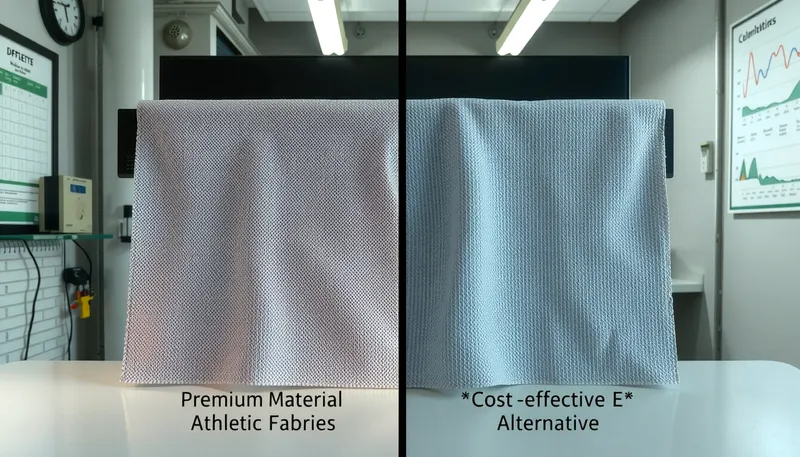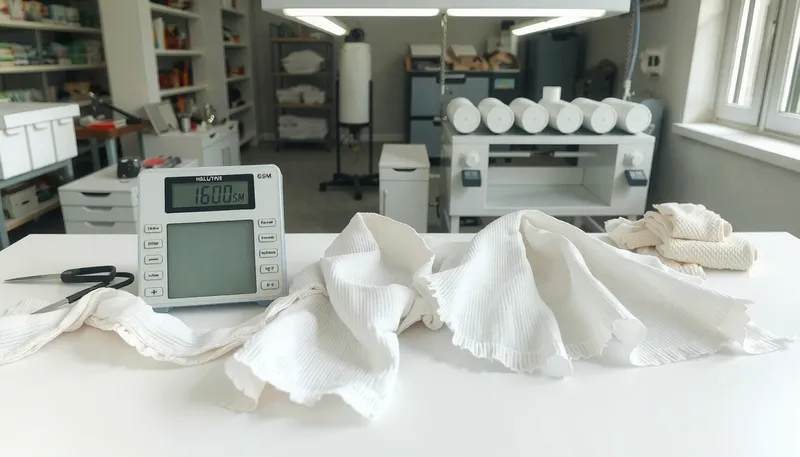
Have you ever come across a label showing '160gsm' and felt like you needed clarification? This is the correct article for you. The number printed on the tag is more of a cipher than a number. It talks about how fabrics are made, their characteristics, weight, and applications.
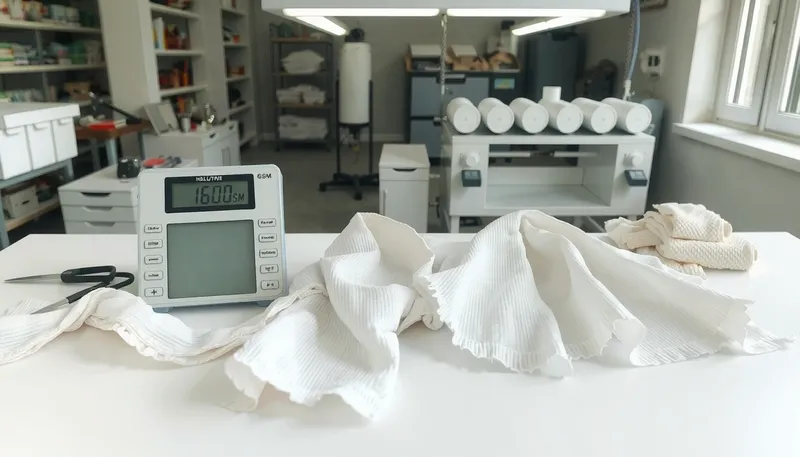
GSM, or Grams per Square Meter, is a metric that expresses the weight and thickness of a fabric. In addition, it is a measurement standard that is prominent in the textile industry for its accuracy. This guide will simply break the codes of fabric gsm. We will utilize the typical 160gsm weight as our primary reference for the example. With it, the concept will be crystal clear.
Key Takeaways
- What does GSM stand for? GSM, short for Grams per Square Meter, is a measure of fabric weight. A bigger number corresponds to a denser fabric.
- Pros of 160gsm: 160gsm is the standard weight of light fabrics. It has good opacity, meaning you will not see through it, yet it is light enough to feel comfortable and move freely.
- GSM is not Everything: To treat a fabric right, its knit is just as important as its weight. This determines the fabric's durability and comfort.
- Choose the Right GSM: The proper GSM is contingent on your personal preferences and needs. Consider the season, desired drape, and the intended use.
ABCs of Fabric GSM: What Exactly is GSM?
GSM stands for Grams per Square Meter. It is one way to measure weight. You take a square piece of fabric that is one by one meter and weigh it.
Think of it similar to paper. Thin printer paper feels entirely different from a thick cardstock. They weigh differently. Fabrics work similarly.
A higher GSM means the fabric is dense, while a lower GSM makes the fabric feel lighter. Some people even prefer the breathability of fabrics with lower GSM, which are often used for more comfortable styles.
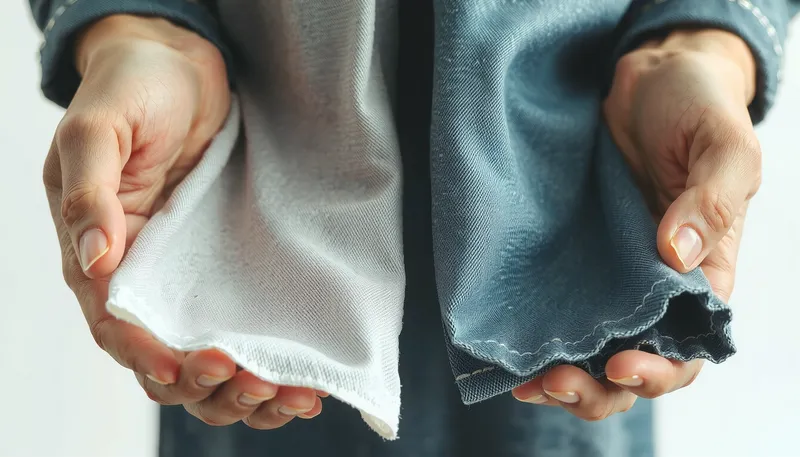
Using GSM is helpful since it is static everywhere. It allows the objective comparison of any fabric types, thus, we manage to make the right decisions regarding fabric purchase. This Essential Guide to GSM: Fabric Weight Explained shows the fabrics we commonly use and how this standard fabric weight helps us make affirmative choices.
The Numbers Speak: A Practical Guide
Seeing the numbers is one thing. But what do they actually feel like? This guide to fabric weight explains the common scales.
Here is a simple table that demonstrates the different GSM values and how each of them can be used in your projects.
| Weight Category | GSM Range (Approx.) | Common Fabrics & Uses | Feel & Characteristics |
|---|---|---|---|
| Lightweight | < 160 GSM | Sheer blouses, summer dresses, t-shirts, linings, activewear | Airy, breathable, often see-through, drapes well |
| Light-to-Medium | 160 - 220 GSM | High-quality T-shirts, polo shirts, lightweight sweats, base layers | The "sweet spot", good opacity, versatile, durable |
| Medium-weight | 220 - 300 GSM | French terry, fleece, standard sweatshirts, light jackets | Substantial, structured, good for cooler weather |
| Heavyweight | 300+ GSM | Heavy hoodies, sweatpants, denim, outerwear | Thick, warm, highly durable, holds its shape |
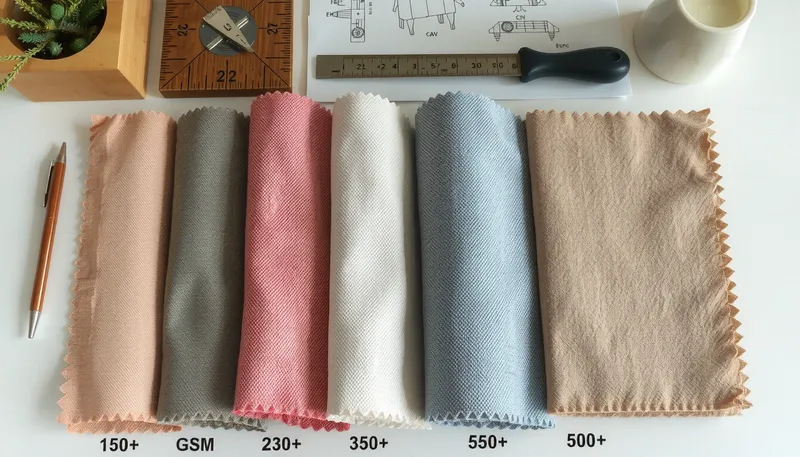
The Optimum Choice: 160gsm as the Perfect Degree
So, What Does 160gsm Mean? Fabric Weight Explained in real terms shows us something important: For many situations, 160 gsm is a superlative choice. Especially for a t-shirt or training clothes. Not too light, and not too heavy - just right.
From our observations, we can conclude that fabric types under 140gsm are thin and hence, weak. Many are see-through. They may end up being easily damaged and often lose their original shape.
More Than Weight: Why How It's Made Matters
Are all 160gsm fabrics the same? The answer is clearly no. How the fabric is knit is the other half of what makes it good.
Let's look at two common 160gsm knits. The first is single jersey. This is used for most basic t-shirts. It's light and breathable. But its edges want to curl up. This can be a problem when sewing or printing. It can make designs look warped.
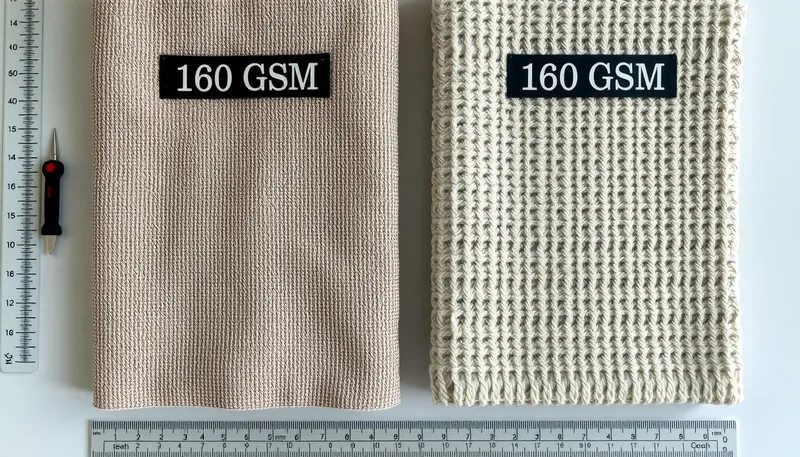
The second is interlock. This is a type of double-knit fabric. At the same 160gsm weight, interlock is much more stable. It feels smoother on both sides. Most importantly, its edges lay flat and don't curl.
This stability is why we made a fabric like the Nylon Interlock| D036. It's a 160gsm interlock with a special structure. It acts like a stable base for printing. This design stops the warping that ruins prints on other light knits. Your patterns stay sharp and clear.
How to Pick the Right GSM
Now that you have fabric gsm explained, how do you pick the right one? Ask yourself these simple questions. They'll help guide your choice for any project.
- What will you use it for? A summer t-shirt needs a lower GSM than a winter hoodie.
- How do you want it to hang? For a flowy dress, pick a light fabric. For a structured jacket, you need a heavy one.
- How much coverage do you need? A sheer top can be under 100 GSM. But a solid t-shirt should be closer to 160 GSM.
- What's the weather like? Hot weather calls for light, breathable fabrics. Cold weather needs thick, warm materials.
Thinking about these factors will help you match the fabric to what you need. This guide on All You Need To Know About Fabric Weight shows how to do this perfectly.
FAQ: Your Fabric GSM Questions Answered
Is a higher GSM always better quality?
Not always. "Better" depends on what you'll use it for. A higher GSM means a heavier fabric. This is great for a winter coat. But it's not good for a summer running shirt. Quality comes from matching the right GSM and fiber type to what you're making.
How can I find out the GSM of a fabric if it's not listed?
When shopping online, look in the product details. You can also ask customer service. In a store, you can tell by feel. A 160gsm shirt will feel more solid than a 120gsm one. It won't be see-through either. It will also feel lighter than a 220gsm fabric.
Does GSM affect fabric shrinkage?
GSM itself doesn't cause shrinking. The type of fiber matters more. How the fabric is made also matters. But heavier GSM fabrics have more material packed in. They might shrink more if they're not treated first.
What is a good GSM for a standard t-shirt?
A good everyday t-shirt is usually 160-190 GSM. This gives you a great mix of comfort and long life. It also gives good color coverage. It's the standard for a reason.
Can two fabrics with the same GSM feel different?
Yes, absolutely. As we talked about, how the fabric is made matters. Jersey feels different from interlock. Cotton feels different from nylon. This is true even if they weigh the same. This is a key part of understanding fabric weight.
Written by Forall Lab
© Forall Lab • Powered by Kunpeng ONE