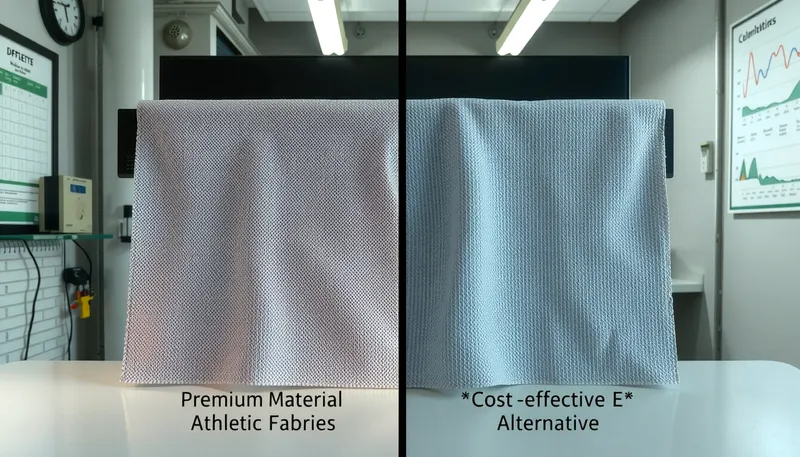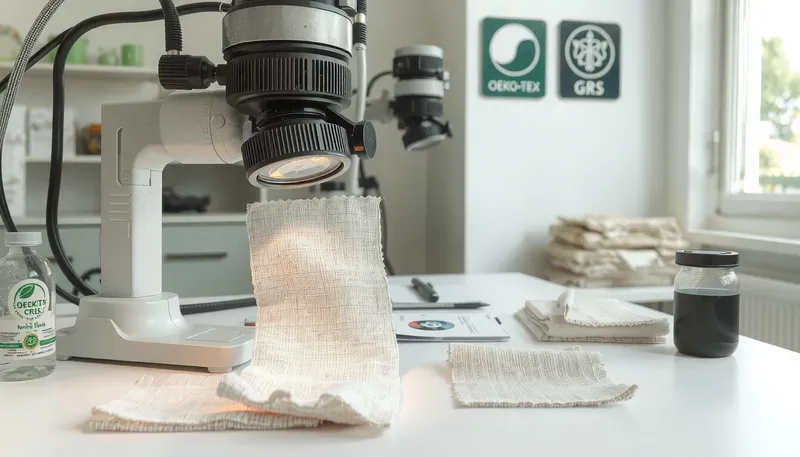
As a designer or brand owner, you're faced with several choices for fabrics. You also find many confusing certifications: OEKO-TEX®, GRS, GOTS, among others. It is understandable that you might feel overwhelmed. However, by following this guide, you will be able to cut through the confusion. Certifications are not mere marketing terms. They signify quality, safety, and trust. This practical fabric certification guide will help you determine what the essential labels mean for your brand and customers.
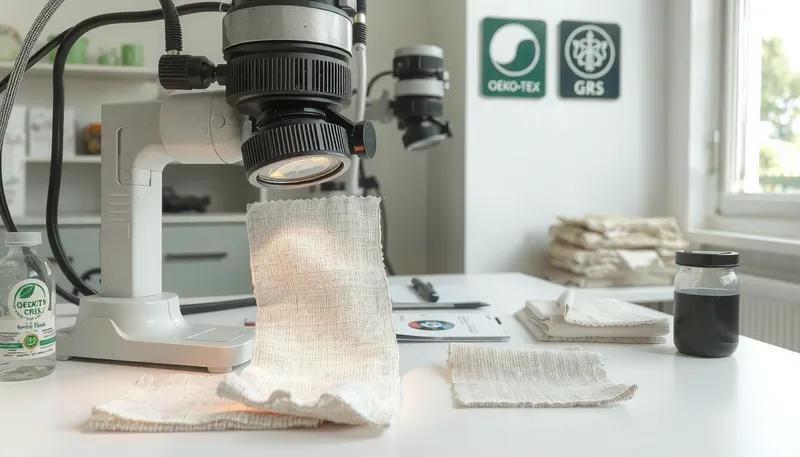
Key Points
- Safety First: Certifications like OEKO-TEX® STANDARD 100 check that all harmful chemicals are eliminated from the fabrics. This naturally makes them safe to get in touch with the skin. A must-have for clothing.
- Trust is Important: Certifications from impartial third parties are the only way you can prove your assertions. They build trust with customers and protect the company from possible damage to its reputation.
- Know Your Needs: Product safety is the main concern for OEKO-TEX®. GRS (Global Recycled Standard) deals with recycled content and responsible production. You might need one or both.
- Always Check: Don't ever just accept a supplier's word. Always refer to the appropriate online databases for any question of certification.
Introduction: Beyond the Label - Why Fabric Certifications Matter
Sourcing fabrics is not as easy as it seems. Although labels and logos represent sustainability and security, they tend to be ambiguous. For this reason, even professional designers confuse between OEKO-TEX®, GRS, and other standards.
We consider these certifications not just as a plus but necessary. They are your working tools. With them, you can validate claims, guarantee that consumers are safe, and build the brand that the people trust.
This guide will help you achieve the most in terms of the most relevant standards broken down into easily digestible parts. We will outline what they endorse, especially in the way of skin safety. We will also help you pick the correct ones for your products.
The Foundation of Trust: Why Certifications are Essential
Using fabrics certified is a core business practice in the year 2026. It offers protection to customers, you, and your market from outside threats. This is responsible sourcing.
Ensuring Product Safety: The Critical "Safe for Skin" Standard
Why does it have to? Uncertified textiles can have substances that are harmful to health. These substances can be leftover pesticides from farming, heavy metals from dyes, or banned chemicals. As skin irritants, allergy triggers, and in some cases more serious health conditions, they can be dangerous.
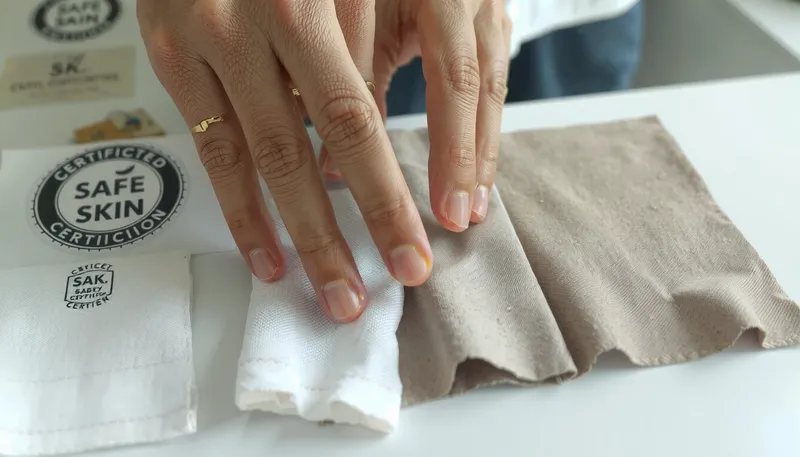
When it comes to clothing items which contact the body directly—a top example is activewear, undergarments, and babywear—this is not the only thing to think about. It's a basic requirement to offer a quality product. The production philosophy of our company includes ensuring that a fabric is safe for skin.
Building Strong Consumer Trust and Brand Integrity
Anyone can say that their product is "safe" or "eco-friendly." A certification issued by a trusted third party turns your claim from "we say" to "it's proven." This is how you build trust.
Consumers have become shrewder and more selective than ever. A recent survey showed that people are indeed willing to raise their budget for clearly marked and verified products. By having a certification label with you, consumers will be sure you're committed to product safety and quality.
Navigating Market Access and Reducing Risk
Certifications also aid you in meeting the varied legal standards imposed across the world. For example, the EU has REACH regulations, while in the US, CPSIA is the operative law. These laws restrict some chemicals from use in consumer goods.
The use of certified fabrics can protect you from the unwarranted headaches of not complying with these regulations. You can rest easy avoiding the costs attached to product recalls or infringement lawsuits. While these recurrent headaches can be hard, they can be handled with thoroughly developed sustainable fabric certification programs, which can help brands meet which requirements.
Understanding the Labels: A Deep Look into OEKO-TEX® and GRS
Among the many certifications that you might perceive, OEKO-TEX® STANDARD 100 and Global Recycled Standard (GRS) are almost the most frequent and most significant. They have different, but equally important, goals. Training on them is essential to having a notion about fabric certifications.
OEKO-TEX® STANDARD 100: Your Guarantee of Human-Ecological Safety
The primary concern of OEKO-TEX® STANDARD 100 is safety for the user. It checks the finished product and all its components—including the yarn, buttons, etc—for over 100 substances that might be harmful to the human body.
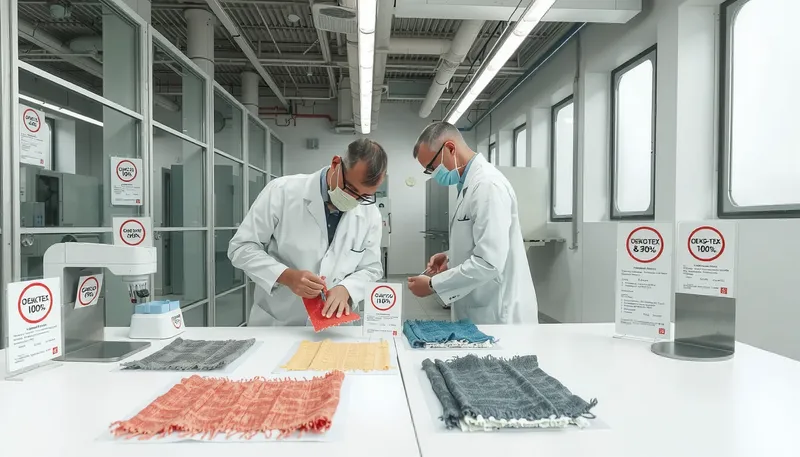
To make an analogy: if a fabric is OEKO-TEX® STANDARD 100 certified, it is entirely safe for your skin. Testing has been done, and it has been proven that it contains no unsafe chemicals at any level. Our D083 production follows the same standard of safety. Thus, every fabric we create is skin-friendly as we believe this to be of utmost importance.
For example, our Air-Sculpt 34™ | Anti-Yellowing Nylon Spandex Air-Layer Fabric (Molded Bra Cup Ready) is the best choice for molded bra cups, which are direct-contact items. This 20D Micro-Nylon fabric used in the design is "Mochi-Touch" as it introduces new safety principles. This is the pioneering fabric that will be an excellent choice for products that are always in contact with the skin.
Global Recycled Standard (GRS): Checking Recycled Content and Responsible Production
The Global Recycled Standard (GRS) mostly focuses on two main areas. The first is to affirm how much of the content is recycled. The second is to ensure that the production process is eco-friendly and socially responsible.
GRS tracks the entire chain of custody. It is a systematic process that allows following the recycling of the material from the recycler to the product. Audit factories for things such as chemical use, water treatment, and fair labor practices. GRS is a robust vehicle to push for sustainability claims.
OEKO-TEX® vs. GRS: What Certificate Do You Really Need?
This is a prominent query for many brands. The response varies with your product and the brand's commitments. For example, the comparison table I produced here can make it simple to select between them.
| Feature | OEKO-TEX® STANDARD 100 | Global Recycled Standard (GRS) |
|---|---|---|
| Primary Focus | Product Safety (Harmful Substances) | Recycled Content & Responsible Production |
| What it Guarantees | The finished textile is safe for human skin. | The fabric contains verified recycled material and was made ethically. |
| Ask for this when... | Your top priority is consumer safety (e.g., underwear, activewear, baby clothes). | Your brand story is built on sustainability and using recycled materials. |
| Can they work together? | Yes. A GRS-certified recycled fabric can also be OEKO-TEX® certified for safety. This is the gold standard. |
A Practical Fabric Certification Guide: From Sourcing to Checking
The first thing to do is learn the definitions. The second is to apply that knowledge in the real world. Here is the expert guide to using certifications in your sourcing process.

Step 1: Matching Certifications with Your Product & Brand
Before discussing with a supplier, ask yourself two questions:
- What is my primary product use?
- What are my brand values?
If you are designing a performance legging that you'll be widely seen in most likely wearing, then the OEKO-TEX® is crucial for your promise of safety. On top of that, if those leggings have recycled polyester material and are advertised as being sustainable, GRS is of utmost importance for proving the environmental marketing messages.
Step 2: Asking the Right Questions to Your Fabric Supplier
Once you find the fabric that you like, you need to ask for the documentation. Don't just check if it's "certified". Instead, be specific.
Here are the critical questions your supplier should answer:
- "Can you provide the certificate for this specific fabric?"
- "What is the certificate number and who issued it?"
- "Is the certificate for the finished fabric or just for the raw yarn?" (This is essential, as treatments and dyes are often added later).
Step 3: Don't Just Trust—Check. How to Verify a Certificate's Authenticity
This is the most significant step. It is the one many brands pass over. A supplier may send you a PDF of a certificate, but that document could be expired, invalid, or cover a different product. It is your job to check.
Here's our method:
- Visit the official database. For OEKO-TEX® use their online Label Check. For GRS use Textile Exchange's certified company database.
- Enter the certificate number that the supplier provided to you.
- Scan the details carefully. Is the certificate valid until 2026? Is it for the right company? Most importantly, does the scope cover the exact product you are buying?
This process of checking is vital. As this comprehensive guide to textile certification says, grasping what each label actually guarantees is the only way to ensure your brand integrity.
Frequently Asked Questions (FAQ)
Here are quick answers to some common questions we hear about fabric certifications.
1. Can a fabric have both OEKO-TEX® and GRS certifications?
Yes, absolutely. This is often the ideal scenario for a product that is both sustainable and skin-safe. A fabric made from GRS-certified recycled fibers can be sent for OEKO-TEX® testing to ensure it is free of harmful substances. This combination offers the strongest assurance to your customers.
2. Is OEKO-TEX® the same as "organic"?
No, they are different. OEKO-TEX® STANDARD 100 certifies that a fabric is free from harmful chemicals, but it doesn't mean the original fibers (like cotton) were grown organically. For that, you would look for a certification like GOTS (Global Organic Textile Standard), which covers the organic status of fibers and responsible processing.
3. What's the difference between GRS and RCS (Recycled Claim Standard)?
Both standards verify recycled content, but GRS is much stricter. GRS includes additional social and environmental requirements for the processing stages. It also requires a higher minimum recycled content (50%) for a product to carry the GRS label, compared to RCS (5%).
4. Does a supplier's certificate cover all their fabrics?
Not always. Certifications are often given for specific products, or fabric compositions, or for particular production lines. It is common to be mistaken to assume a supplier's general certification applies to everything they sell. This is ever so often the reason you must verify the certificate for the exact fabric you are going to buy.
5. Why are certified fabrics sometimes more expensive?
The cost reflects the investment required for certification. This includes rigorous third-party auditing, extensive chemical testing, and maintaining responsible manufacturing processes. Think of it as an investment in product safety, verifiable quality, and your brand's long-term integrity.
Conclusion: Sourcing with Confidence
Fabric certifications are not a luxury anymore. They are essential for the production of safe, high-quality, and trustful goods in 2026. The whole purpose of explaining these labels is to clarify to you the fabric certification guide.
The two central points to recall are: OEKO-TEX® guarantees skin support and GRS can be your proof of recycled content and responsible production.
Now with this information, you can approach sourcing materials with newfound self-assurance. You may select fabrics according to their aesthetics and tactile feelings, but with the backing of the fact that they meet your brand's commitment to quality, safety, and responsibility.
Written by Forall Lab
© Forall Lab • Powered by Kunpeng ONE