In 2026, choosing between seamless and cut-and-sew leggings is a dilemma for activewear brands. Seamless is always the one with a premium and a lot of customers were impressed with it. But it costs a lot of money. The regular cut-and-sew method is good because it allows you to make it the way you like it. However, it does not always have a chic and modern look. Therefore, many entrepreneurs are confused: when we speak of Seamless vs Cut-and-Sew: Which Is More Profitable? The question is really difficult. The decision can't be just one way. The authentic seamless production is really capital-intensive. But a cunning cut-and-sew strategy can allow you to have a seamless high-end look at much less money. You will learn from this article exactly what business realities are. We will share with you a "hybrid" method by which you can produce a luxurious item without incurring high startup costs.
Main Points
- Seamless Profits: The costs of showing seamless thread paths on cutting look very high. Machines run at around $50,000 to $100,000+ each. This often causes a minimum order amount that is very high for new brands and poses a risk.
- Advantage of Cut-and-Sew: Standard cut-and-sew gives you more room for design, less quantity on orders, and a speedy market entry. However, it is sometimes bulky due to seams.
- The Profitable Trick: A "raw-cut hybrid" approach uses technical cut-and-sew fabrics that do not need to be hemmed. This imitates the smoothness of seamless leggings at the almost half price.
- The Essence of Fabric: The core principle of the hybrid method is the use of the specific fabric types like Air-Sculpt 34™. They are actually firm enough for the cut edges, which are not hemmed. They give a sense of luxury with no additional costs of seamless.
- The Right Track: Most startups and scaling brands in 2026 will get the right balance from the raw-cut hybrid scheme. Thus, you will get a high-end design, less money lost, and a profit margin that is higher.
A Brief Overview: Basics
Before talking about business plans, let's have a brief overview of the two production methods. For you to take the smart decision for your brand, it is important to first understand the key differences. The main difference in the making of the leggings is how they are created.
What Is Seamless Production?
Seamless items are not made by cutting and sewing parts together. Instead, they are made of a quality yarn that is twisted into a tube and knitted on a floating needle that continuously feeds the yarn into the machine.
The result of this is a piece with almost no seams. Many times there is only the one at the crotch. It makes the garment feel smooth with close to no friction for wearing comfort. As stated in The Secrets of Seamless, this technological achievement facilitates the inclusion of built-in textures and compression levels into the fabric itself.
What Is Cut-and-Sew Production?
Cut-and-sew is the traditional method of garment making. Big rolls of fabric are sprawled out. Pattern pieces are cut from the fabric. The pieces are then sewn together to make the finished product.
This method has a tremendous advantage since it opens up the design process to new ideas. You can easily insert pockets. You can have differently colored panels. You can mix various types of mesh fabrics. You can design complicated shapes. It is the most efficient and widely adopted approach to clothing production.
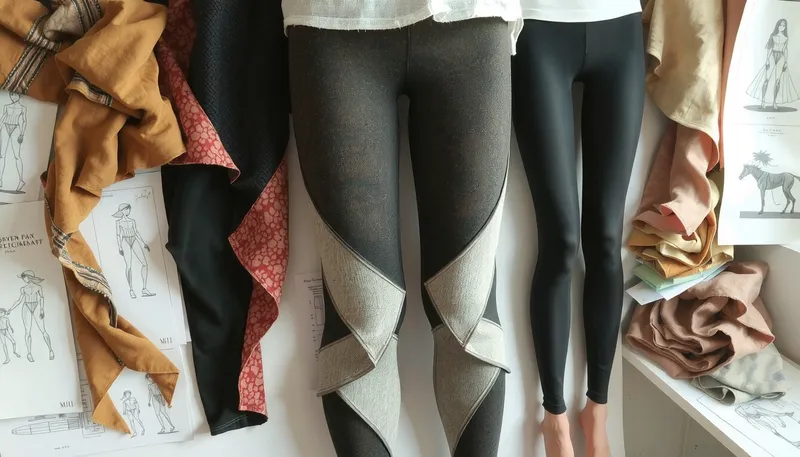
Comparison Table
| Features | Seamless | Cut-and-Sew |
|---|---|---|
| Construction | It is a knitted form of a single tube. | Pieces are cut and stitched. |
| Feel & Comfort | Minimal rubbing, very smooth. | Some seams can sometimes be felt. |
| Design Flexibility | Limited (patterns are knitted in) | High (pockets, panels, mixed fabrics) |
| Material Waste | Lower material waste | Higher material waste (off-cuts) |
The Profit Problem: The Hidden Costs of Going Seamless
Seamless-styled leggings may command a high price, but the truth to making them is that they come loaded with hidden expenses. For start-ups and growing companies, these hidden costs can easily be a roadblock to profit. A deep examination of the financial aspects in the case of seamless vs cut-and-sew manufacturing shows that the former is not always the most logical option.
A Financial Barrier
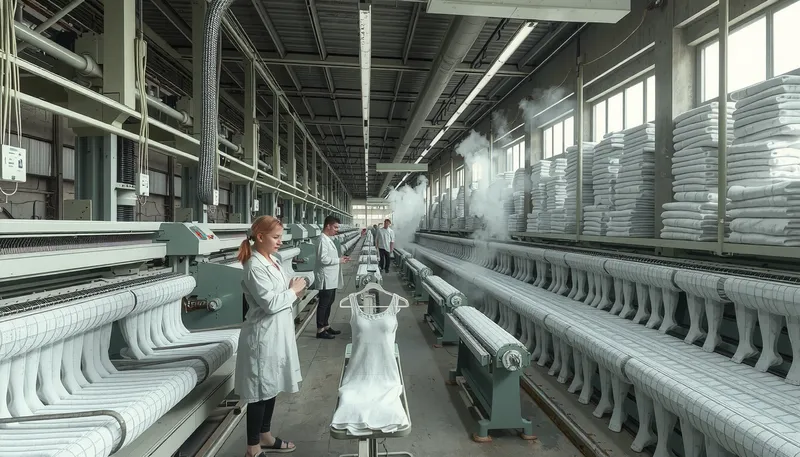
The main barrier is the equipment expense. A seamless knitting machine, like one from Santoni, can run anywhere from $50,000 to over $100,000 each. Manufacturing companies need to buy entire fleets of these machines to operate successfully.
This huge upfront investment is direct damage to you, the brand. On top of the huge initial outlay, you have to bear the burden of high unit costs for seamless gear as the factory pays off these machines.
The Order Mountain
These machines hold such a high price that factories can't afford them idling. They need to be processed long and constantly on one model to make a profit.
This leads to a very high minimum order quote. For the case of seamless leggings, the standard practice is for factories to ask for 1,000 to 3,000 units of each style and color. For an upstart, ordering 3,000 pairs of black leggings would block a significant amount of cash into one single product. This is a giant risk in terms of money.
Slower Time-to-Market
The development of a seamless garment is also a slightly slower process. This is because programming the machines is quite complicated. The technicians working on this are also not your ordinary machinists. All the trials and tests that a new design has to go through in order to get the correct shape, compression, and texture are numerous.
This lengthened development time means you get your product to the market slower. It also becomes more difficult for you to react to upcoming trends in 2026.
The Competition Squeeze
A few seasons back, the company was intriguing with its exclusive seamless leggings. Today, the field is overcrowded with your marketing competition. Large firms already dominate a vast part of the market. Competing with them based on cost is an infeasible plan. The way to be different is to spend more on unique knitted patterns or yarns. This is an additional cost.
The Hybrid Plan: A Seamless Look with Cut-and-Sew Profits
The solution is to get smart. The secret of making profit in 2026 is not the choice between seamless or cut-and-sew. It's about using a hybrid plan that provides you with the look and feel of seamless at the same time cutting the cost of cut-and-sew.
The Basic Idea
Buying seamless is one of the trendy items customers are after. Flat waistbands and leg hems are the very definition of this look. Not just the absence of a side seam. The same chic design if not better is achieved by utilizing this alternative cut-and-sew method.
Raw-Cut Edge Technology
The answer is found in the innovative fabrics made for "raw-cut" edges. These are cutting-edge materials that have a special construction that stops from curling or fraying when cut.
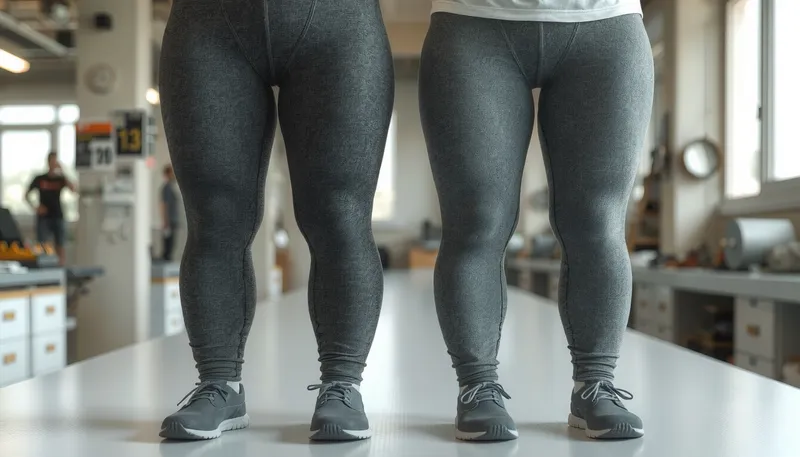
This also means you can get rid of the bulky, stitched hems at the waist and leg openings entirely. Instead, you get a perfectly flat, clean edge that looks and feels very sleek against the skin. This finish imitates that of premium seamless leggings.
The Method in Action
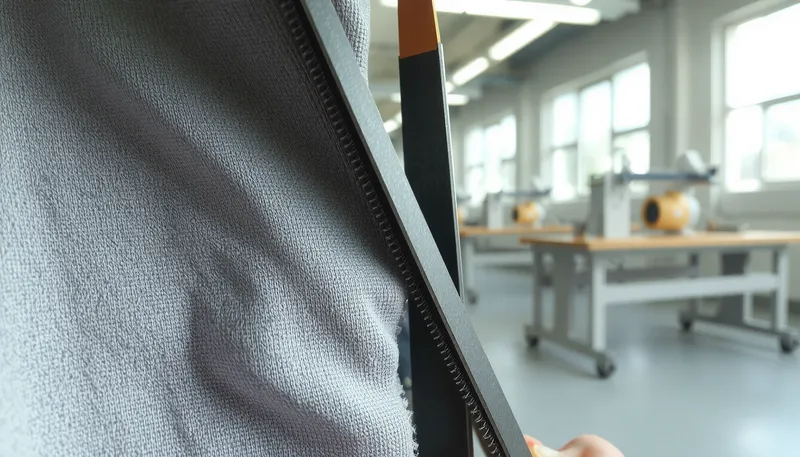
This approach is truly the very best for the money as per our first hand experience. The fabric is raw-cut-enabled so we can completely skip the finishing step of hemming. Apart from a more comfortable edge against the skin, this creates flatter results and saves sewing labor time of 15-20% per piece. That is a direct cost saving that results in better profits on every single unit.
The Right Fabric Is Key
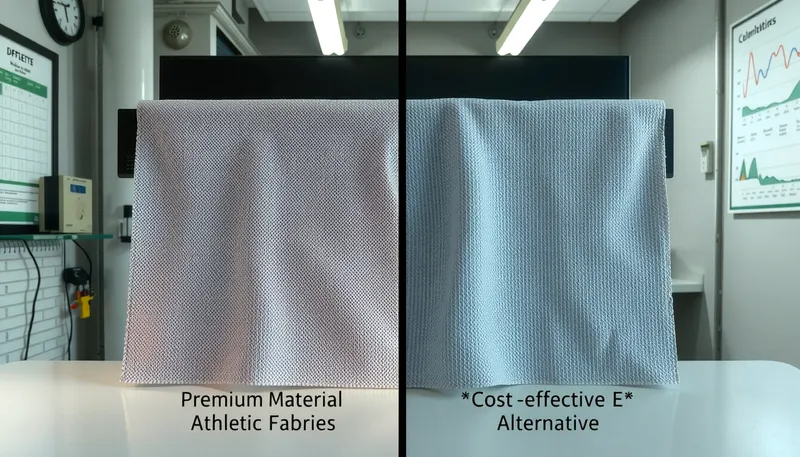
Such a plan will work only if you use the right materials. The fabric has to be stable enough. It must have excellent stretch and recovery properties to prevent deformation. It should also be of premium quality and have a dense feel to match up to the expected luxury. As this article on Cut & Sew vs. Seamless Leggings states, cut-and-sew gives the way to a lot more these types of fabrics.
As an example, the use of Air-Sculpt 34™ | Anti-Yellowing Nylon Spandex Air-Layer Fabric (Molded Bra Cup Ready) is allocated specifically for this purpose. It features a high-gauge interlock structure with 20D Micro-Nylon thread. The creation of this surface is done by weaving at a lower speed. The result is a soft, flowing finish. Besides that, it is also strong enough for a clean, raw-edge cut. This fabric practically creates the difference between cut-and-sew expense and seamless luxury.
Your Strategic Blueprint: Choosing the Right Method
So, how do you decide? The choice between seamless leggings and cut and sew is very dependent on your brand's funds, vision, and scale. Here is a simple framework to guide your decision in 2026.
Choose True Seamless If:
- You have a strong financial muscle and are an already established brand that can withstand the high initial costs.
- Your brand is all about performance and so the garments utilize integrated, body-mapped compression zones.
- You are 100% sure that you can deal with order amounts of at least 3,000 units per style and color without putting your business at risk.
Choose Traditional Cut-and-Sew If:
- Your designs are complicated and among them, they include many panels, zippers, all-over prints, or large pockets.
- You should really begin with order amounts that are under 500 units because only that way can you test the designs well.
- If you value creative freedom and different design elements much more than a simple look.
Choose the "Raw-Cut Hybrid" Plan If:
- You are a startup or growing brand whose goal is to achieve a high-end minimal look on a budget.
- You want to deliver the feel and look of seamless leggings without having to pay high prices and make far greater quantity orders.
- Profit and a strong return on investment are your key factors that should lead you to a have a successful line.
FAQ: Your Questions on Seamless vs. Cut-and-Sew Answered
Here are answers to some common questions about this critical making choice.
1. What's the main difference in feel between true seamless and "raw-cut" leggings?
True seamless leggings have no side seams. This gives them a uniform, tube-like feel around the leg. Raw-cut leggings are still made with cut-and-sew. So they will have construction seams like an inseam. However, the absence of bulky hems at the waist and ankles provides a very similar sleek, non-restrictive feel at the key points where leggings often dig in.
2. Are raw-cut edges durable?
Yes, but only when the correct fabric is used. Materials specifically designed for raw-cut applications have a high-tech construction that locks the yarns in place. This prevents any fraying or unraveling. It ensures the piece remains durable through repeated wear and washing.
3. Can I still add pockets to raw-cut cut-and-sew leggings?
Absolutely. This is a major advantage of the hybrid method. You can easily sew on side pockets or add a hidden waistband pocket. This is a feature that is very difficult and expensive to add to a true seamless legging. It gives your product an edge in functionality.
4. What are the typical order amounts for the raw-cut hybrid method?
The order amounts are the same as standard cut-and-sew. These are much lower than seamless. You can often start production with just 300-500 units per style. This makes it far more accessible and less risky for new brands testing the market.
5. Does the raw-cut method reduce fabric waste like true seamless?
No. The raw-cut method is still a form of cut-and-sew. So it will generate some fabric off-cuts during the cutting process. True seamless knitting has near-zero waste. However, for a small or medium-sized brand, the huge money savings from lower order amounts and reduced labor costs almost always outweigh the cost of this material waste. The final verdict on Seamless vs Cut-and-Sew: Which is More Profitable? often comes down to these accessible startup costs.
Written by Forall Lab
© Forall Lab • Powered by Kunpeng ONE